

Slang is fun, but has limits
Teachers around campus might hear words that don’t seem to make any sense. Bruh? Aura? No cap? According to Merriam Webster, no cap means “genuinely or truthfully”, and is an example of modern slang. Slang is an informal kind of communication mostly used and popular amongst kids and teenagers, however knowing when and what kind of slang to use takes practice.
“What I normally use is like bruh… It’s like a shortened version of brother,” said junior Luis Chiprez.
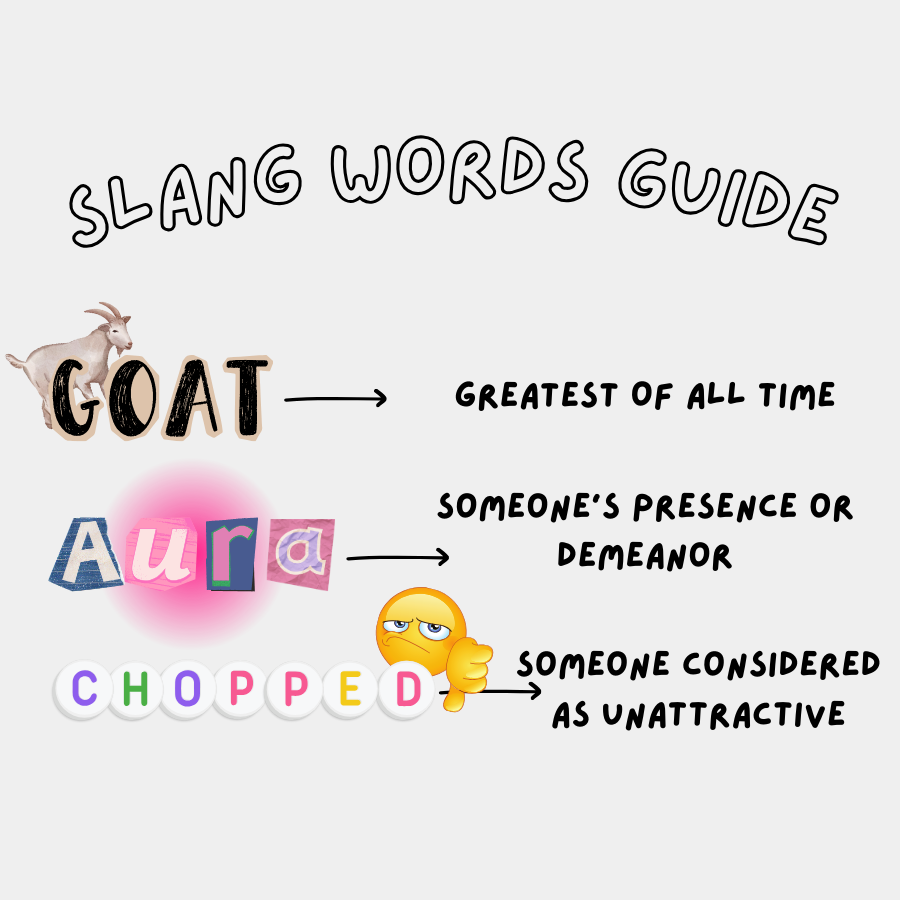
Junior Talaifina Fetuu uses slang often. “I use aura, bro… I use G.O.A.T.” This acronym, which means “greatest of all time,” used to be only for sports to commemorate them as the best, so you’re calling someone the best. For Fetuu, slang is mainly used in casual situations where you know the person you are talking to. “I use slang in school, usually when I’m with my friends and my parents.”
Fetuu explained what slang she thought was appropriate for school has to do with how it is taken. “I think [it’s appropriate] when complimenting someone, and other slang, not so much, because they may be explicit and someone can take it in… a mean way.”
For example, chopped and auraless are words that students might not say to teachers. According to Merriam Webster, chopped means “unattractive or undesirable” whereas auraless would mean a lack of aura, or being “impressively cool,” both of which might be seen as derogatory comments.
Even with casual language like slang, there are still boundaries with what can be said. Chiprez affirms this, stating that “curse words” shouldn’t be used in a school environment. He said that slang should be avoided unless you have a strong relationship with them.
Slang can help teachers connect
Teachers are with students every day, interacting with them not only to teach but also to connect and listen to them. Slang adds a layer to the connectivity that an adult teacher and a teenage student can have. English Teacher Sarah Gutierrez said slang is about connecting with students. “I think slang can help build a bridge to form connections and create that level of relatability.” Gutierrez tries using slang words. “I use six seven,” a nonsensical expression connected to a song, and “the little fish dance,” she said.
Graphic Design teacher Joe Soto agreed, sharing how he thinks slang affects classroom atmosphere. “I think it’s part of socializing, so I don’t see anything negative with it.” Soto comments on appropriate slang now and how slang differs from era to era. “Back in the day, a lot of slang would be bad words, or they would have been like, derogatory by today’s standards.”
Soto said, “I think the positive aspects are the bonding. Only when you use slang in a bad way to demean someone, that’s when it becomes negative.”
But not all adults are fans
Campus Security Monitors monitor kids in the halls, help keep them in check, and make sure everyone is safe. They are around kids all day, so they hear the slang kids use on a day-to-day basis in the halls and classrooms. Jessica Thompson and Tonya Wilkerson are well-known CSMs that can be found in West Hall and East Hall.
Wilkerson feels strongly that kids should learn at least just a bit of manners when it comes to adults and talking to them. “I don’t like them, and I especially don’t like it when they call me bro,” said Wilkerson. When kids bring their slang to adults, or to her, she feels bothered by it.
Thompson and Wilkerson share the same opinion on slang words today. They dislike the usage of the words, especially when it is towards adults. Thompson dislikes it, but she cares little mind to it and even learned two slang words from kids. “Eating, I guess that doesn’t mean actually eating food, means our outfits look nice”. Another was “Clocking, with clocking tea with this.” She then showed a hand expression with the index finger and the thumb in a clapping motion. And clocking tea means supporting or successfully defending a point.
Overall, they believe such words should not be used when talking to an adult, and learn to have just a little manners. Although, most adults don’t mind it as much as Wilkerson does.
She said, “I think its disrespectful, especially to an adult.”
On the other hand, some people use slang to uplift each other, like Fetuu referring to someone as their G.O.A.T. or bro, showing others how it is included in their lives. New slang is a fun part of Gen Z culture, and adds nuance to how kids communicate with each other, even if it might be confusing for adults. And that’s no cap.
Additional reporting by Joshua Martinez.



Joshua Martinez • Jan 22, 2026 at 11:04 am
After they announced this article was published in journalism Enoch shouted out 6-7 and did the 6-7 hand thing